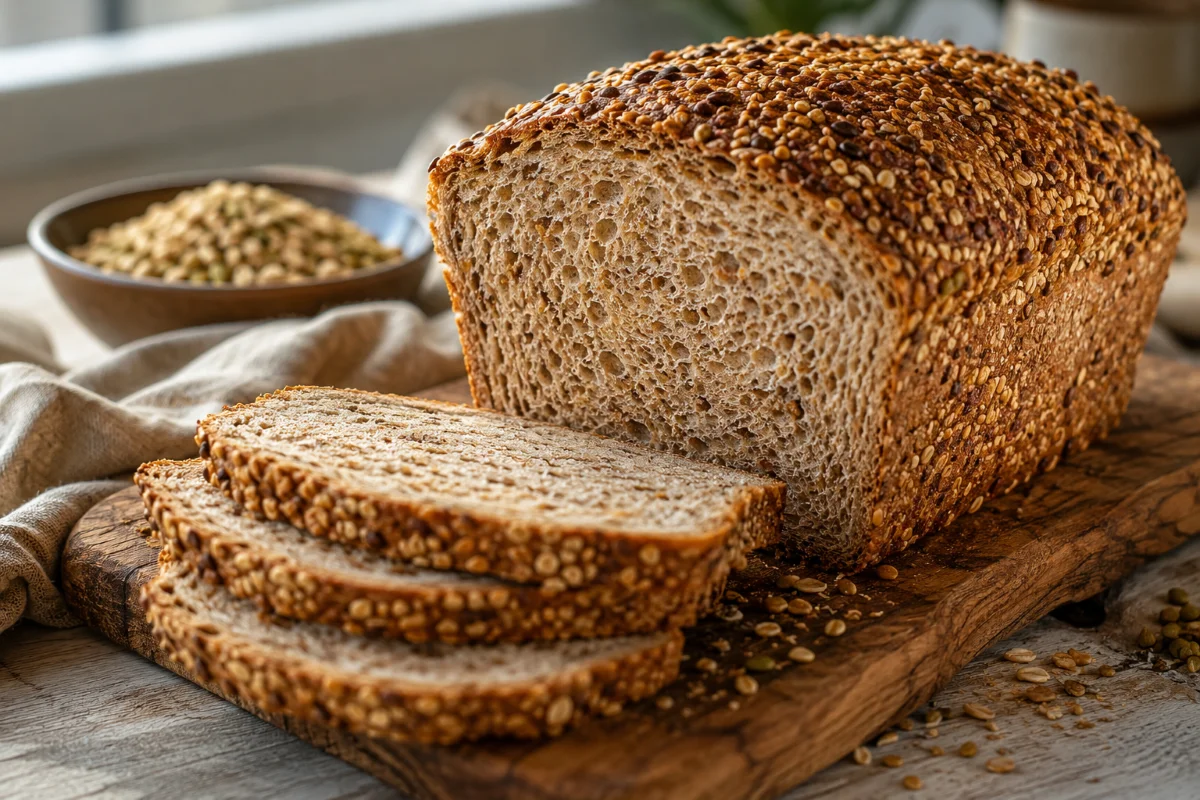
I started making my own Ezekiel bread recipe after getting tired of paying bakery prices for a loaf I could easily replicate at home once I understood the sprouting step. This isn’t a quick-rise white sandwich loaf — it’s a dense, nutty, naturally sweet bread built from sprouted whole grains and legumes, and once you see how the sprouts change the flour’s behavior, you’ll understand exactly why it tastes and feels different from anything else in your bread rotation. Follow this method once and you’ll have a loaf with real structure, a moist crumb, and none of the gumminess that trips up most first attempts.
Why This Ezekiel Bread Recipe Works
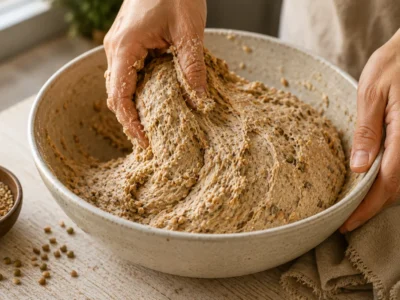
The magic of an Ezekiel bread recipe is in the sprouting, not just the mixing. Sprouting wheat, barley, and legumes before grinding them breaks down some of the starches and phytic acid, which is part of why sprouted grain products are often easier to digest and carry a different nutrient profile than bread made from unsprouted flour — USDA FoodData Central tracks these nutrient differences in detail for anyone who wants to compare sprouted grain products directly. Once you sprout your own grains (or start from sprouted flour), the dough behaves less like a standard yeasted dough and more like a dense, slightly sticky, high-hydration mix — that texture is normal, not a sign you’ve done something wrong.
What You Need Before You Start This Ezekiel Bread Recipe
Before you start, get your grains sprouting at least 2–3 days ahead, since this recipe isn’t a same-day bake. Whole grain and legume flours absorb liquid differently than refined flour, and King Arthur Baking‘s guidance on whole grain hydration is worth reading if you’ve mostly baked with white flour before, since it explains why doughs like this one feel tackier and denser at every stage. You’ll also want a loaf pan with straight sides (not a boule), a kitchen scale, and patience for a slower rise — this dough won’t puff the way a lean white dough does, and that’s expected.
✅
Test Kitchen Approved Tested by Eleanor Harper · Updated July 29, 2026
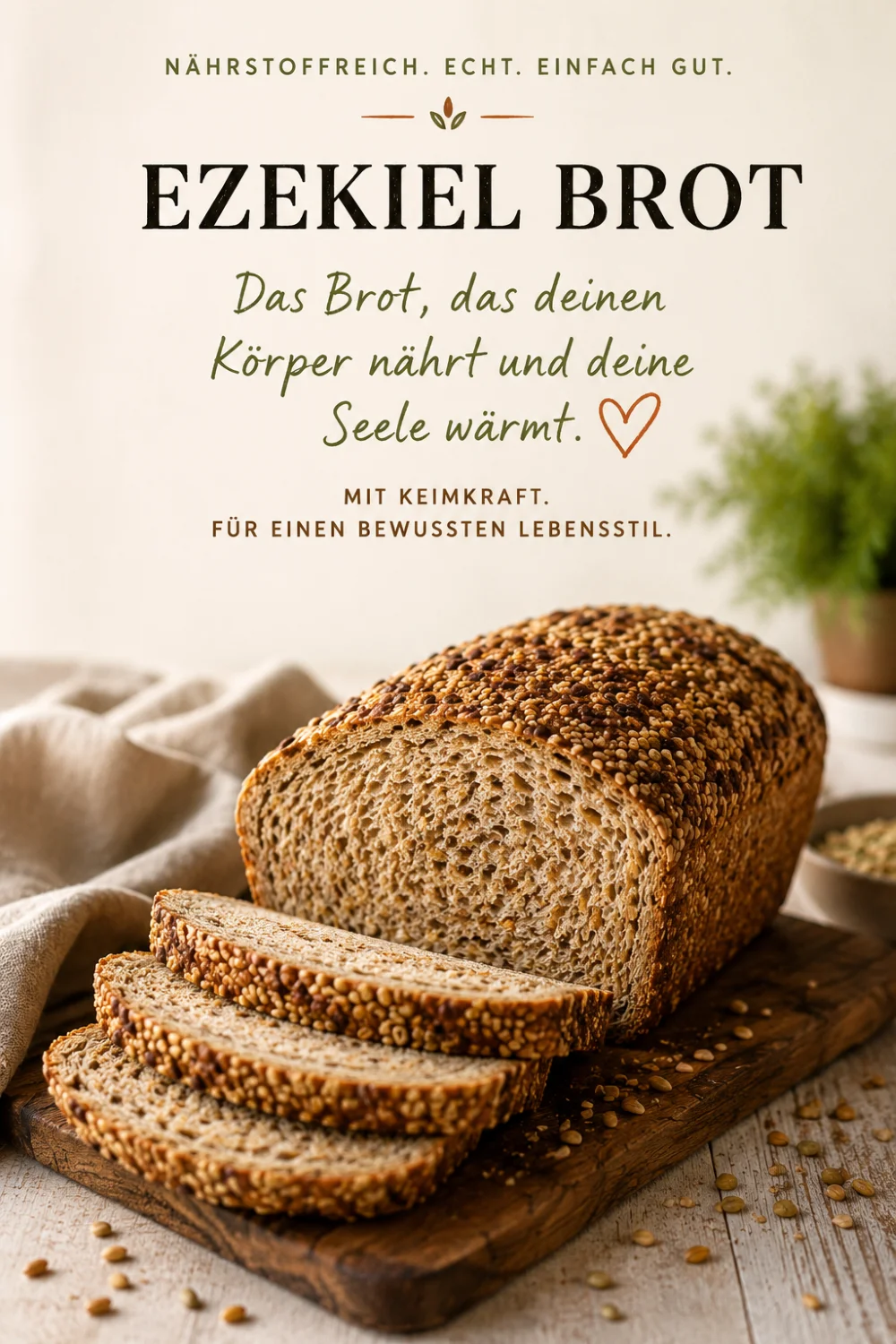
Ezekiel Bread Recipe — Sprouted Grain Loaf Done Right
Ezekiel Bread Recipe — Sprouted Grain Loaf Done Right
Instructions
1
Sprout the grains and legumes (48–72 hrs)
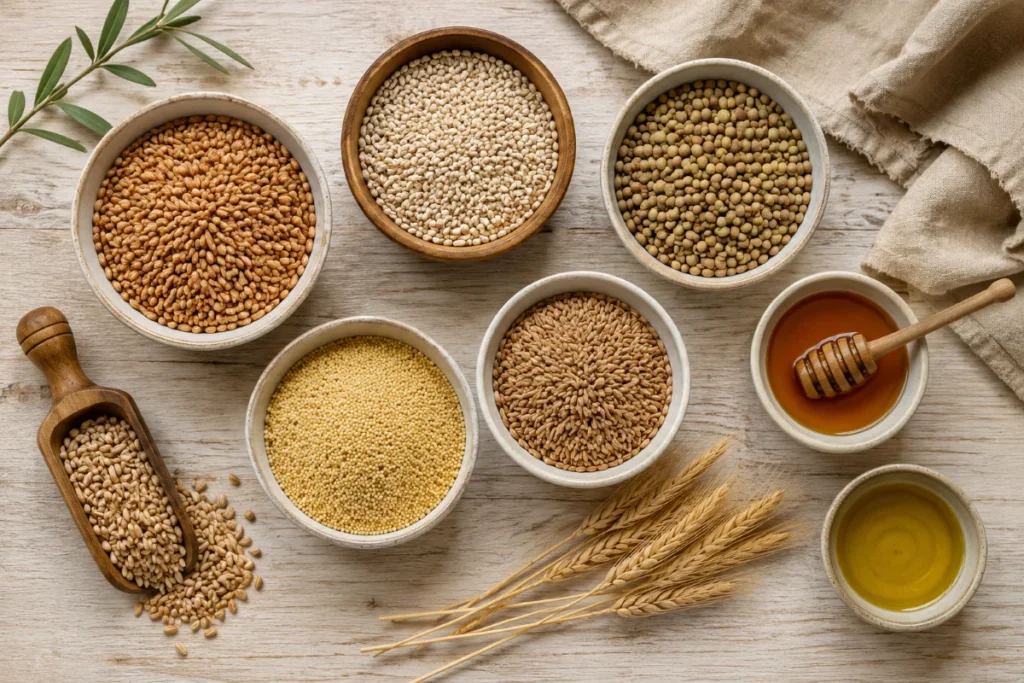
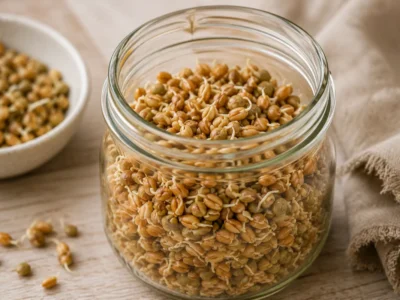
Rinse the wheat berries, barley, lentils, millet, and spelt, then soak in water for 8–12 hours. Drain and rinse twice daily until each grain shows a tiny tail-like sprout — you're looking for that visible sprout, not a fully grown shoot
2
Grind the sprouted mix
⏱ 5 min
Pat the sprouted grains dry and pulse in a food processor until you get a coarse, slightly wet paste — it won't look like flour, and that's correct.
3
Bloom the yeast
⏱ 10 min
Combine warm water, honey, and yeast; let sit until foamy.
4
Mix the dough
⏱ 10 min
Combine the ground sprout paste, bloomed yeast mixture, olive oil, and salt. Gradually add whole wheat flour until the dough comes together — it will feel tacky, not sticky, once it's ready.
5
Knead
⏱ 10 min
Knead by hand or mixer until the dough is elastic but still dense; it won't develop the same windowpane as a white dough.
6
First rise
⏱ 60–90 min
Cover and let rise in a warm spot until roughly doubled.
7
Shape and pan
⏱ 10 min
Shape into a loaf and place in a greased 9x5 pan.
8
Second rise
⏱ 45–60 min
Let rise until it crests just above the pan rim.
9
Bake
⏱ 45 min
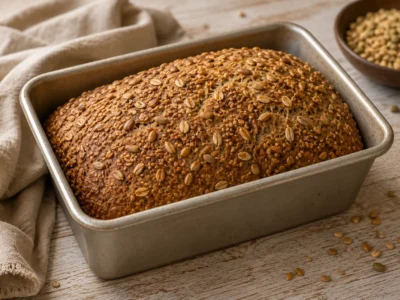
Bake at 350°F until deeply golden and the internal temp reads 190°F.
10
Cool completely
⏱ 120 min
Cool fully on a wire rack before slicing to let the crumb set.
✨
The Final Dish
💬 "Serve warm slices with a swipe of honey butter or alongside a bowl of soup for a hearty, whole-grain pairing."
🥗 Nutrition Per Serving
🔥145kcalCalories
🧈2.5gFat
🌾27gCarbohydrates
💪6gProtein
145kcal
Fat2.5g · 15%
Carbs27g · 70%
Protein6g · 16%
📋 Show Detailed Nutrition ›
🧈 Saturated Fat0.4g
🍭 Sugars3g
🌿 Dietary Fiber4g
🧂 Sodium210mg
* Nutrition values are estimates and may vary based on ingredients and brand choices.
Frequently Asked Questions (FAQ)
Why is my Ezekiel bread dense?
This bread is meant to be dense — it's made from sprouted whole grains, not refined flour, so it won't rise like a standard sandwich loaf.
Can I skip sprouting and use sprouted flour instead?
Yes, store-bought sprouted wheat flour works and cuts the process down significantly, though the texture will be slightly less moist than fresh-sprouted grain paste.
How do I know my grains are properly sprouted?
Look for a tiny visible tail on each grain, usually the same length as the grain itself — that's the signal to stop sprouting and move to grinding.
Can I freeze Ezekiel bread?
Yes, slice it first and freeze individual slices for up to 3 months, then toast directly from frozen.
Is Ezekiel bread the same as sourdough?
No — Ezekiel bread relies on sprouted grains and yeast rather than a sourdough starter, so the flavor and rise process are different.
Chef Tips & Notes
Don't rush the sprouting — cutting it short leaves the grains starchy and dense instead of tender. If your dough feels too wet to shape, add flour one tablespoon at a time rather than all at once; sprouted grain doughs are far more forgiving of a slightly loose shape than a dry, tight one. My secret: a spoonful of the sprouted paste reserved and mixed into the flour for dusting during shaping gives the crust extra flavor.
Storage Instructions
Store cooled, sliced loaf in an airtight container at room temperature for up to 4 days, or refrigerate for up to 10 days since there's no preservatives. For longer storage, freeze slices individually for up to 3 months and toast straight from frozen. Reheat single slices in a toaster or 300°F oven for 5 minutes to restore crust texture.
How do you like this recipe?
4.9 / 5 (12 ratings)
📬
Never Miss a Recipe!
Get our best test-kitchen recipes delivered straight to your inbox. No spam, ever.
Raised in a 3rd-generation Vermont family bakery, Eleanor "Ellie" Harper turned her lifelong love of flour and fermentation into a science. With a degree in Food Science & Fermentation Technology and 11 years as a commercial baker, Ellie demystifies hydration ratios, proofing timing, and crust development so home bakers achieve bakery-worthy bread every single time.