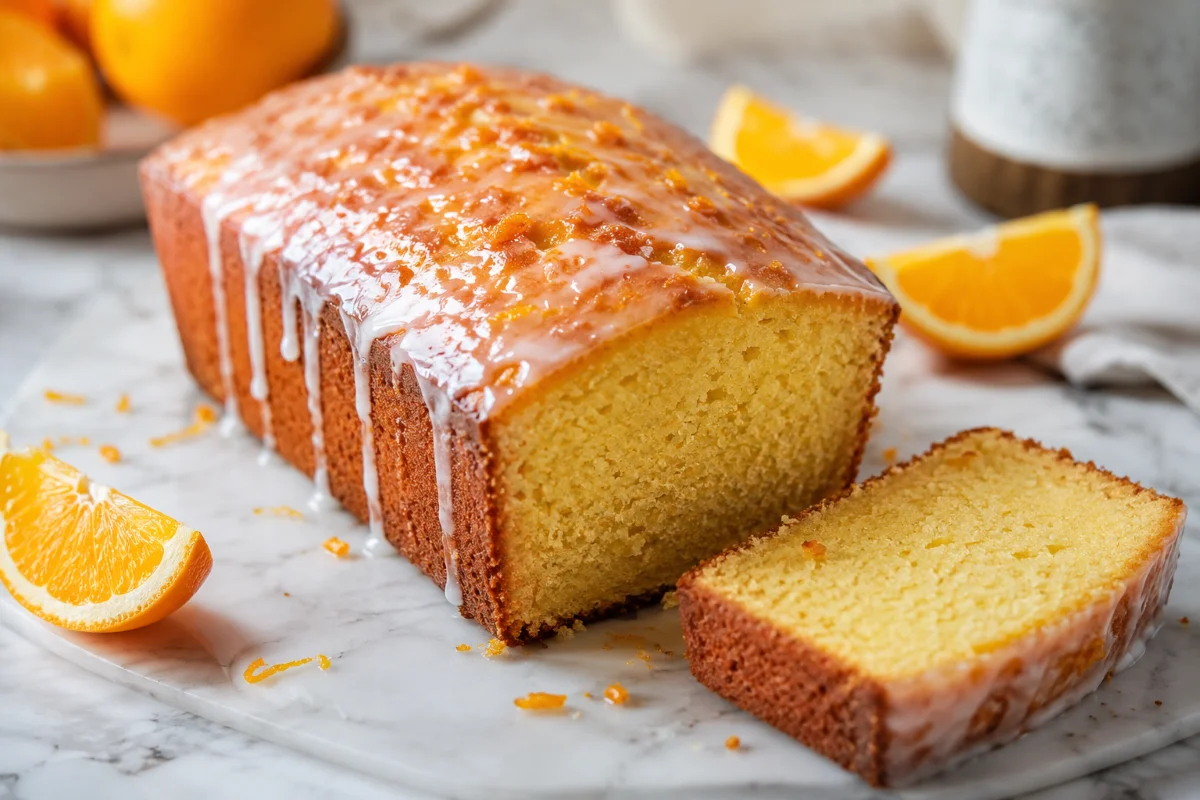
Some cakes shout for attention. This one doesn’t have to — it simply sits on the counter, golden and dense, and lets the citrus do the talking. I learned to make orange pound cakethe way I learn most things worth keeping: by making it too dry once, too dense twice, and finally understanding that the butter, the eggs, and the orange all need to be working at the same temperature before they ever meet. What you get, once the technique clicks, is a crumb that’s tight but never heavy, and glossy enough on top to look like it came from a proper pâtisserie counter.
Why This Orange Pound Cake Recipe Works
A pound cake lives or dies on emulsification — the slow, patient beating of butter and sugar until the mixture turns pale and holds air, then the gradual addition of eggs so the batter never breaks. Room-temperature ingredients combine more evenly than cold ones, which is a foundational baking-science point according to King Arthur Baking, and it’s the difference between a cake that rises evenly and one that domes unevenly and cracks. I fold the orange zest in early, so the oils perfume the butter itself rather than sitting on top of the batter, and I finish with fresh juice in the glaze so the citrus stays bright instead of muted by the oven’s heat.
What You’ll Need Before You Start Your Orange Pound Cake
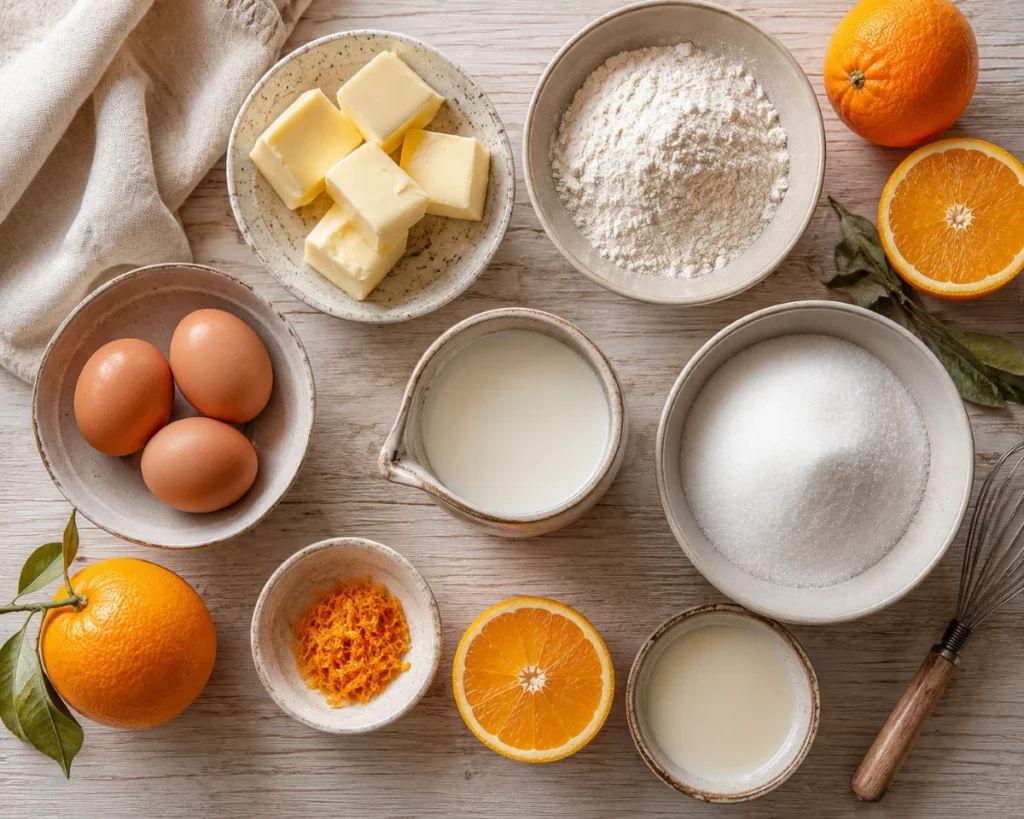
Pull your butter, eggs, and buttermilk out of the refrigerator a full hour before you begin — this is not a step to rush. You’ll want a proper 9×5-inch loaf pan, a stand mixer or hand mixer with real power behind it, and a fine microplane for the zest, since coarse zest turns bitter and stringy in the crumb. If you’re unsure your oven runs true to temperature, an oven thermometer is worth the few dollars; pound cakes are unforgiving of a too-hot oven, and calibrating against a trusted baking reference like America’s Test Kitchen will save you a sunken center. For general food-safety basics on handling eggs and dairy at room temperature, the USDA Food Safety and Inspection Service is a solid reference if you’re new to baking. I also recommend a wire rack for cooling, since a cake left in its pan traps steam and turns the crust soggy.
✅
Test Kitchen Approved Tested by Sophia Rossi-Bennett · Updated July 29, 2026
Preheat the oven to 325°F (163°C). Butter a 9×5-inch loaf pan generously and line the bottom with parchment, leaving an overhang on the long sides for easy lifting later.
2
Cream the butter and sugar
⏱ 5 min
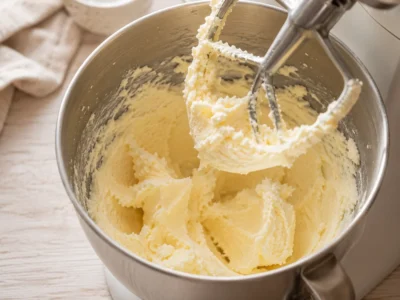
n a stand mixer fitted with the paddle attachment, beat the softened butter and sugar together on medium-high for a full 5 minutes, until the mixture turns pale and almost fluffy — this is where the cake's structure actually begins. Don't shortcut this step; it's what keeps the crumb tight instead of gummy
3
Add the eggs one at a time
⏱ 4 min
Beat in the eggs individually, letting each one fully incorporate before adding the next. If the batter looks like it's starting to separate or curdle, add a spoonful of the flour to bring it back together.
4
Fold in the zest and vanilla
⏱ 1 min
Add the orange zest and vanilla extract, beating just until combined. The batter should smell bright and citrusy before you've even added the flour.
5
Alternate dry and wet ingredients
⏱ 4 min
Whisk the flour, baking powder, and salt together in a separate bowl. Add it to the butter mixture in three additions, alternating with the buttermilk in two additions, beginning and ending with the flour. Mix on low speed just until no streaks of flour remain — overmixing here is the most common reason pound cakes turn tough
6
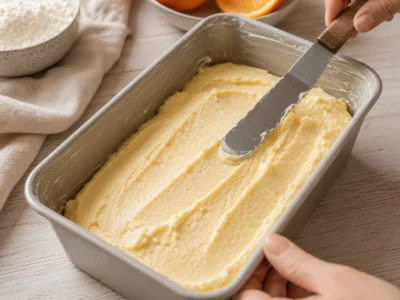
Fill the pan and smooth the top
⏱ 2 min
Transfer the batter to the prepared loaf pan and smooth the top with an offset spatula. Tap the pan firmly on the counter twice to release any large air bubbles.
7
Bake low and slow
⏱ 65 min
Bake for 60–70 minutes, tenting loosely with foil after 35 minutes if the top is browning too quickly. The cake is done when a skewer inserted in the center comes out with just a few moist crumbs, not wet batter, and the top springs back gently when pressed.
8
Cool, then glaze
⏱ 15 min
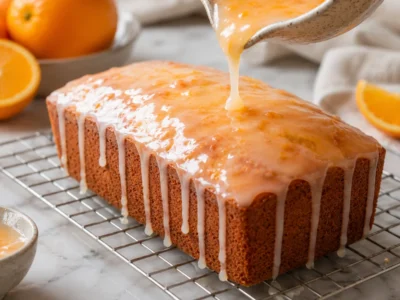
Let the cake cool in the pan for 15 minutes, then lift it out using the parchment overhang and cool completely on a wire rack. Once fully cool, whisk the powdered sugar, orange juice, and zest into a smooth glaze and pour it over the top, letting it drip down the sides.
✨
The Final Dish
💬 "Slice thick and serve at room temperature with a strong cup of coffee — the glaze soaks slightly into the crumb as it sits, which only makes it better."
🥗 Nutrition Per Serving
🔥385kcalCalories
🧈18gFat
🌾52gCarbohydrates
💪5gProtein
385kcal
Fat18g · 42%
Carbs52g · 53%
Protein5g · 5%
📋 Show Detailed Nutrition ›
🧈 Saturated Fat11g
🍭 Sugars36g
🌿 Dietary Fiber1g
🧂 Sodium190mg
* Nutrition values are estimates and may vary based on ingredients and brand choices.
Frequently Asked Questions (FAQ)
Why did my orange pound cake sink in the middle?
This usually means the oven was too hot, the pan was underfilled, or the cake was underbaked. Check doneness with a skewer at the 60-minute mark rather than trusting the timer alone.
Can I freeze orange pound cake?
Yes — wrap the unglazed, fully cooled cake tightly in plastic and foil and freeze for up to 3 months. Glaze it fresh after thawing for the best texture and shine.
Can I make this cake without a stand mixer?
A hand mixer works fine, though the creaming step will take a minute or two longer to reach the same pale, fluffy stage. A whisk alone won't build enough air into the butter.
Why is my glaze too thin or too thick?
Add powdered sugar a tablespoon at a time if it's too thin, or a few drops of orange juice if it's too thick — you want it to coat the back of a spoon and hold a ribbon when drizzled.
Chef Tips & Notes
Don't substitute bottled orange juice in the glaze — the fresh juice carries oils from the zest that bottled juice has lost, and you'll taste the difference immediately. If your butter isn't fully softened, the cake will end up dense rather than tender; press a finger into it, and it should leave an indent without the butter collapsing. My one secret: rub the orange zest into the granulated sugar with your fingertips before creaming — it releases far more citrus oil than folding the zest in on its own.
Storage Instructions
Store the cooled, glazed cake tightly wrapped or in an airtight container at room temperature for up to 4 days, or refrigerated for up to 7 days. To freeze, wrap the unglazed cake in plastic wrap and foil and freeze up to 3 months; thaw overnight at room temperature before glazing. A 10-second stint in the microwave brings a single slice back to just-baked softness.
How do you like this recipe?
4.9 / 5 (12 ratings)
📬
Never Miss a Recipe!
Get our best test-kitchen recipes delivered straight to your inbox. No spam, ever.
Sophia Rossi-Bennett spent 13 years as a custom wedding cake designer and pastry chef in Chicago before transitioning into recipe media. A graduate of the French Pastry School, Sophia designs show-stopping layer cakes, silky frostings, and festive celebration desserts formulated specifically for standard home ovens and accessible piping techniques.